Goodbye Fellow Traveler
Recently, my partner in the world for the past 50 years passed away.
We met in March 1965 on a blind date set up by her sorority and my fraternity in the 2nd semester of our freshman year at St. Louis University. In June 1968 we were married on the south side of Chicago and the rest is, truly, a global story.
Together we traveled to over 40 countries and lived in 5 countries. We adopted a daughter in Surabaya, Indonesia and have a daughter born in Anchorage, Alaska. Along the way we lived in many states in continental USA and in Alaska twice. We lived in 3 countries in Asia, in Turkey and in Eastern Europe. During many of the years we were posted outside the USA we had a home in Maui, Hawaii for our daughters and us to visit each summer during home leave.
These living and travel experiences provided us, and our daughters, with an appreciation of the value of other cultures and what we have in our home country. Our lives were immensely enriched and changed by this experience.

We made many good, longtime friends in all these places over the 40 years of our wanderings. My partner was the social one, which is why we have these friends across so many borders, languages and cultures. She was the one with the smile and easygoing approach.
While I was doing oil and gas exploration and later developing franchises in various countries, my partner was doing social welfare work to bring better medical care and training to areas of the world that were trying to improve their lives and that of their families. Easygoing, but globally street smart!
She traveled to small villages on the island of Java to train nurses and medical staff on how to help patients in small clinics and hospitals. One time even conducting medical staff training sessions in a leper colony. She visited small villages in central Turkey to help local women learn how to market authentic native crafts. She raised money among the foreign oil companies to rid orphanages in Ankara, Turkey of roaches. She even helped veterinary doctors in Hong Kong give physical therapy to race horses in Olympic sized pools. In Alaska, she developed burn therapy techniques with the U.S. Army that reduced treatment pain to Alaskan natives burned in their villages.
We lived several times in the USA, and there my partner practiced physical therapy and managed large numbers of physical, occupational, speech and recreational therapist focused on geriatric medicine. Her bedside manner was exceptional as a clinician. And as a mother and wife!
While I flew to over 70 countries on business, my partner raised our daughters with a strong sense of values, manners, responsibility and a belief from our time in many countries that all people and cultures are of equal quality, value and importance.
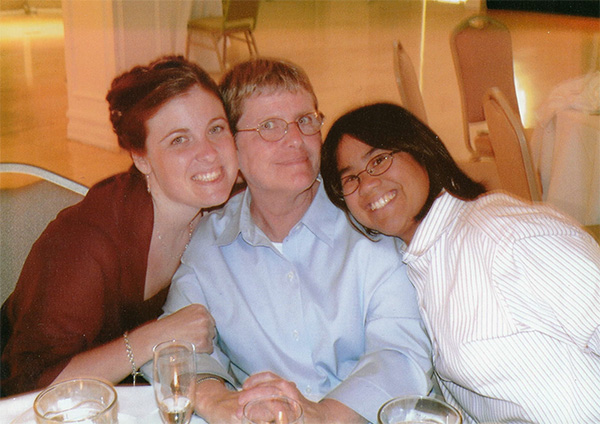
In her mid-50s, at the height of her career and contribution to our lives and the larger world, she was diagnosed with early onset Alzheimer’s disease. The disease she and her medical teams had dealt with in hundreds of patients over the years.
That was 12 years ago. The longest 12 years of her life, and that of our mine and our daughters. Now Nancy Edwards is at rest after a very long battle with this horrible disease. We, her adoring family and friends, are helping her live on to fight this disease by contributing to medical institutions focused on finding a cure for Alzheimer’s. The Nancy Imlay Edwards Foundation has a website (www.nancyslegacy.org) that also seeks to educate the large world of our family on this disease.
We were truly blessed to have Nancy as long as we did. But I have to ask: what could Nancy have done with those 12 years and many more to follow? Certainly much more than I could ever hope to accomplish.
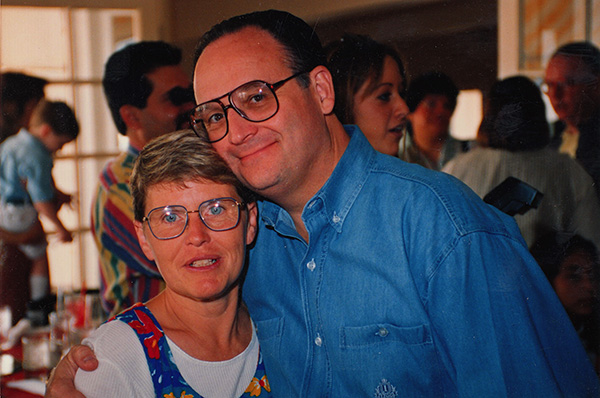
Thank you, my partner, friend, wife and lover, for enriching the lives of literally thousands of people on four continents. And for making Amy, Heather and me who we are.
You are missed. By so many, in so many places, and in so many ways.
The Fastest 2 Minutes in International Business
For 2015, EGS’ U.S. clients are seeking licensees in over 20 countries. Our GlobalTeam™ of highly experienced international project managers on the ground in 35 countries contributed to the following brief summary of the world mid-2015:
| Asia | China Japan Malaysia Mongolia The Philippines Thailand Viet Nam |
Citizens: you didn’t really lose money in the Shanghai market. Large corporations are investing in new consumer projects. Prime Minister didn’t really put US$1B in his bank account. U.S. pizza and coffee franchises flourishing. Seriously. Subic Bay is operating again, U.S. Embassy doubling in size. Stable politics. Military dictatorships often are stable. U.S. sailors on shore leave, 6%+ GDP growth. |
| Americas | Argentina Brazil Canada Chile Colombia Mexico Peru USA |
You still get paid in soybeans, if at all. Economy is stalled, inflation climbing, corruption rife. Tim Horton’s and Burger King are now one??? New President negative on business. Investment stopped. Still ‘show me the money and where it came from.’ Mexico City, Monterrey and Cancun booming. Lima is a city of cranes and new foreign F&B brands. US$15/hour minimum wage means no margins, less jobs. |
| Europe | Ireland Germany Poland Russia Spain Turkey United Kingdom |
GDP growth of 3% in 2015, high for the EU. Difficult to find investors/risk takers for new foreign brands. 3.4% GDP growth for 2015 is the highest in the EU. Foreign brands with US$ denominated rents are closed GDP growth for 2015 of 2.9%. Major 2016 comeback. Finally realized they should shoot at ISIS. 2.4% GDP growth, but normal investment analysis paralysis. |
| Middle East | Egypt Saudi Arabia UAE |
Pent-up consumer demand, scary security and future. Challenges to get new businesses open due to regulations. New building push, large expat influx, airport & airline soaring. |
| Elsewhere | Australia India South Africa |
Economy soaring but tied to commodity exports. Jobs iffy? Not another country, another universe. Low growth, high unemployment (26%), low new investment |
Updated: July 27, 2015
The Fastest 2 Minutes in International Franchising
For 2015 EGS’ US franchisor clients are seeking licensees in over 20 countries. Our GlobalTeam™ of highly experienced international development project managers contributed to the following brief summary of the franchising environment around the world for the New Year:
| Asia | China Japan Malaysia Mongolia The Philippines Thailand Viet Nam |
F&B franchises iffy, as is the investment climate Carl’s Jr. signed a 150 restaurant license New mall developers are seeking US franchises Pizza and coffee franchises – now 2 each! A focus on more US F&B brands Overall stable politics, but economy is iffy F&B franchises desired |
| Americas | Argentina Brazil Canada Chile Colombia Mexico Peru USA |
You still get paid in soybeans Economy is stalled, new investment stopped for now Tim Horton’s and Burger King are now one (???) New President seems negative on business Still ‘show me the money and where it came from’ Mexico City, Monterrey and Cancun booming A focus on more US F&B brands Franchise model with individual owners remains in peril |
| Europe | Czech Republic Ireland Germany Poland Russia Spain Turkey United Kingdom |
Prague has a high GDP/capita, other large cities lower GDP growth of 3% in 2015 is high for the EU Difficult to find investors for new foreign brands 3.3% GDP growth for 2015 is the highest in the EU Foreign F&B brands have US$ denominated rents GDP growth for 2015 of 1.7% is high for large EU countries US F&B investment and high-end malls growing Build a pilot first, then investors come |
| Middle East Egypt | Saudi Arabia UAE |
Interest in new franchise unit investment for 2015 Challenges to get new businesses open due to regulations New trend of neighborhood malls in Dubai |
| Elsewhere | Australia India New Zealand Nigeria Pakistan South Africa |
90%+ local franchises, difficult to get foreign brand investors New government equals a very positive business attitude Few consumers, but pro foreign franchise brands Foreign franchises have numerous operating challenges Not now for foreign brands 90%+ local franchises, but hope for foreign brands |
The Fastest 2 Minutes in International Franchising
In 2014, EGS’ US franchisor clients are very busy finding licensees in over 25 countries. Our GlobalTeam™ of highly experienced international development project managers contributed to the following brief summary of the franchising environment around the world.
| Asia | China | Food quality stinks; new F&B franchises shrink |
| Japan | New, large scale US F&B investment | |
| Malaysia | Government barriers for foreign franchises | |
| The Philippines | New professional companies seeking US brands | |
| Thailand | What coup? New franchise investment by major groups | |
| Viet Nam | Just bring coffee brands | |
| Americas | Argentina | You get paid in soybeans |
| Brazil | 95% local franchisors, government barriers to entry | |
| Canada | True regional development beginning | |
| Chile | Perfect market, except for the lack of people | |
| Colombia | Show me the money and where it came from | |
| Mexico | Selected areas booming | |
| Peru | GDP/capita growth and resulting investment wonderful | |
| USA | Franchise model in the birthplace of franchising in peril | |
| Europe | Czech Republic | Small market, but a perfect European brand showplace |
| Ireland | Investors not quite back to investing | |
| Germany | English not spoken and ‘We already have it’ | |
| Poland | Good franchise growth outside Warsaw | |
| Russia | Really? Now? | |
| Spain | Fast recovery, many investors seeking brands | |
| Turkey | US F&B booming, despite tin pot ruler | |
| United Kingdom | Analysis paralysis. Build a pilot first, then investors | |
| Middle East | Egypt | Next year, really… |
| Saudi Arabia | New F&B brands entering. Permits to open units??? | |
| UAE | Abu Dhabi and ‘More fast food, please’ | |
| Others | Australia | 90%+ local, locals like local brands |
| India | Separate universe | |
| New Zealand | The opposite of Australia, but few consumers | |
| Nigeria | Really??? | |
| Pakistan | Not Karachi | |
| South Africa | 90%+ local franchises to date, but a change is coming |
Working with US Commercial Service (USCS) to Succeed in Taking Your US Franchise into New Countries
According to an International Franchise Association (IFA) early 2014 survey of its franchisor members, 82% now think that taking their franchise international is important to the future success of their franchise. Five years ago, 54% thought going international was important.
Based on 25 years of international franchise experience as a franchisor, master franchisee and, most recently helping over 20 US franchisors go international, I know the most difficult task is finding the right country and the right licensee for your particular franchise.
One solution for US franchises can be working with the U.S. Commercial Service (USCS), the international-focused arm of the U.S. Department of Commerce. The USCS has experts on the ground in over 100 countries whose job is to help US companies sell their products and services.
There are several ways the USCS can help a franchisor go global:
- Country and Sector Reports
- Gold Keys – in-country meetings with pre-qualified licensee candidates
- Franchise Trade Missions – to the Philippines, Mexico and India in 2014
- Background checks on licensee candidates
- Meeting arrangements and local advertising
- Local business and cultural knowledge
- Follow-up after your in-country meetings
But this is not magic where you get on the airplane, land in the new country, meet your new licensee, sign an agreement, get back on the plane for home, and the new licensee sends you the initial license fee. To have a chance at success using the USCS team in any particular country, the franchisor must know and clearly communicate the following:
- Why do you want to enter this particular country?
- What is the profile of whom you want as a licensee?
- How is your brand different than what is already in their country?
- Detailed, clear information on your franchise
- Clear steps and terms for acquiring your franchise
- A financial model that shows how your franchise will succeed in their country
- What training, support and marketing help your franchise will give the licensee
And the franchisor needs to clearly define what they want in an international licensee or master franchisee in a country, such as:
- A passion for and understanding of your business
- A successful business with knowledge in your sector
- Good reputation in the country
- Experienced management to put into your franchise
- Access to suitable real estate
- Marketing oriented company
- The capital to start and grow your franchise in their country
Our company, EGS, has successfully worked with the USCS in over 20 countries around the world since 2001. Here are a few of the successes we have had in recent years working with the USCS:
- Central America – Fuddruckers®
- Chile – Denny’s® and Fuddruckers®
- China – Right At Home Senior Care® and Rita’s Italian Ice®
- Dominican Republic – Denny’s®
- Indonesia – The Melting Pot®
- Ireland – Mr. Handyman® and Two Men And A Truck®
- Mexico – Build-A-Bear Workshop®, Denny’s® and The Melting Pot®
- Mongolia – Round Table Pizza®
- Singapore and Malaysia – Abrakadoodle®
- Viet Nam – Carl’s Jr.®
Not all USCS posts in all countries are able to help find area licensees and master franchisees. To find out whether the local office has a specialist for franchising, go to the following website for specific countries: www.export.gov/country
Or you can contact Ms. Jennifer Loffredo, the U.S. Commercial Service Officer based in the US who manages the USCS Global Franchise Team: (248)452-2254, Jennifer.Loffredo@trade.gov
A close working relationship with the USCS people on the ground in the country, plus patience in finding and signing the right licensee for your specific franchise, are critical to success in using this valuable resource for US franchisors. At the end of the day, you have to help the USCS post help you find your licensee in a country.
The Place of Culture in a Flat World
In April 2005, New York Times columnist Tom Friedman published the iconic book on globalization, “The World Is Flat: A Brief History of the Twenty-First Century”.
The title eludes to the perceptual shift required for countries, companies, and individuals in order to remain competitive in a global market where historical and geographical divisions are becoming increasingly irrelevant.
Per Wikipedia, “Friedman himself is a strong advocate of these changes, calling himself a ‘free-trader’ and a ‘compassionate flatist’, and he criticizes societies that resist these changes. In his opinion, this flattening is a product of a convergence of personal computers with fiber-optic micro cable with the rise of work flow software.”
Many readers, including this author, initially interpreted this as saying that the world is increasingly the same, diversity is going away. A re-reading of Mr. Friedman’s book, and subsequent writings, shows this is not exactly correct. He is proposing that the business world is adopting the same standards worldwide in order to compete with companies in other countries. A strong case can be made for this postulation.
Along comes culture. Dictionary.com defines culture as: “The quality in a person or society that arises from a concern for what is regarded as excellent in arts, letters, manners, scholarly pursuits, etc.; development or improvement of the mind by education or training; and the behaviors and beliefs characteristic of a particular social, ethnic, or age group.”
Businessculture.org says, “Culture illustrates the accepted norms and values and traditional behaviour of a group . . . ‘the way we do things around here.’ The culture of each country has its own beliefs, values and activities. In other words, culture can be defined as an evolving set of collective beliefs, values and attitudes.”
In my experience working in 68 countries over the past 42 years, culture is alive and prospering. In order to do business in other countries, you must be aware of the local culture and how it impacts business to be successful. Flatness is not as important as the culture with which you are dealing. In other words, you must be aware of the diversity in doing business that the local culture represents to be successful in today’s global business environment.
Robert Shaw, a highly experienced and successful global franchise executive based in Orange County, California, has studied the knowledge of local culture as a way to win in business. Mr. Shaw defines three major cultural types that you have to take into account to win in global business:
- Linear – Aggressive, time is money, task focused, individualistic, the “John Wayne” approach – North America, Australia and Northern Europe
- Multi-Active – Relationship comes FIRST and BEFORE business, top heavy hierarchy, only meet with decision-makers – Mediterranean, Latin America, Middle East and India
- Reactive – Relationships first, quiet nodding, listeners, group decisions – Asia (except India.) Nodding simply means they may understand what you are saying. Not that they are agreeing with you.
The aggressive ‘let’s get the deal done and go home’ that US business people often follow leaves no time to develop the relationships that most cultures value and require in order to get business done.
And here are a few cultural “no-no’s” to remember that Mr. Shaw and I have encountered over the years:
- White flowers as a gift in Japan – white is the color for funerals
- Showing the bottom of your shoes in the Middle East – dirtiest thing you can do
- Making the sign for ‘okay’ in Brazil
- Referring to Taiwan as a country in China
- Talking politics – sports and local culture are better topics
- Folding business cards – cards are expressions of who someone is and what they have accomplished
Terri Morrison, in her classic book, “Kiss, Bow and Shake Hands”, shares a few basic but critical cultural differences in doing business in key countries. In regards to meetings:
- In Brazil, lack of punctuality is a fact of life; be flexible about your counterpart’s (lack of) punctuality
- In China, punctuality for all appointments is important
- In India, Indians appreciate punctuality, but do not always practice it themselves!
The bottom line? While business processes may be flattening, cultures are not. To succeed in global business you have to add the cultural factor to your approach to people and companies in other cultures. Ignore the ‘non-flat’ local way of doing business because you think similar business processes are all that counts in a country and you will fail.
Cultures are what make the world an increasingly interesting place!